
Quick Answer
Both marine and bovine collagen can support hair growth, but marine collagen has a slight theoretical advantage due to its exclusive Type I collagen content and smaller peptide size for better absorption.
However, bovine collagen offers better value (about half the price) and contains both Type I and Type III collagen, which supports overall scalp health.
For most people, bovine collagen represents the more practical choice. The most important factor isn’t the source—it’s consistent daily intake of 5-10g combined with adequate protein, iron, and vitamin C.
Introduction
Hair loss and thinning affect millions of people in the UK, prompting many to search for effective, natural solutions. Collagen supplements have emerged as a popular option, with manufacturers claiming their products can promote thicker, healthier hair growth.
But when you’re choosing a collagen supplement specifically for hair health, which source is better: marine or bovine?
This question matters because these two collagen sources differ significantly in composition, bioavailability, and price. Marine collagen typically costs 2-3 times more than bovine collagen, so understanding whether that premium delivers meaningful benefits for your hair is essential.
In this comprehensive guide, we’ll examine the scientific evidence comparing marine and bovine collagen for hair growth, explore how each type works, and help you make an informed decision based on your individual needs and budget.
How Collagen Supports Hair Growth
Before comparing sources, it’s important to understand how collagen benefits hair in the first place.
Your hair is primarily made of keratin, not collagen. However, collagen provides the amino acids your body uses to build keratin. The most important amino acids for hair include proline, glycine, and hydroxyproline—all abundant in collagen supplements.
Collagen may support hair growth through several mechanisms:
Providing Building Blocks: Your body breaks down collagen peptides into amino acids, which it then uses to synthesize keratin and other proteins needed for hair structure.
Proline in particular serves as a primary component of keratin. Supplementing with collagen ensures your body has adequate proline available for hair protein production.
Protecting Hair Follicles: Collagen contains antioxidants that may help protect hair follicles from damage caused by free radicals. This oxidative stress can damage hair follicles and contribute to hair loss, particularly as you age.
By providing antioxidant support, collagen supplementation may help maintain healthier hair follicles over time.
Supporting Scalp Health: Your scalp’s dermal layer—where hair follicles reside—contains significant amounts of collagen. As we age, collagen production naturally declines, potentially weakening the structural support around hair follicles.
Maintaining adequate collagen levels may help preserve the healthy scalp environment necessary for robust hair growth.
Preventing Hair Thinning: Some research suggests collagen may help prevent the hair thinning associated with aging by supporting the dermal layer where follicles anchor.
A study published in the Journal of Cosmetic Dermatology found that participants taking collagen supplements experienced improvements in hair thickness and growth after several months of consistent use.
Marine Collagen for Hair Growth
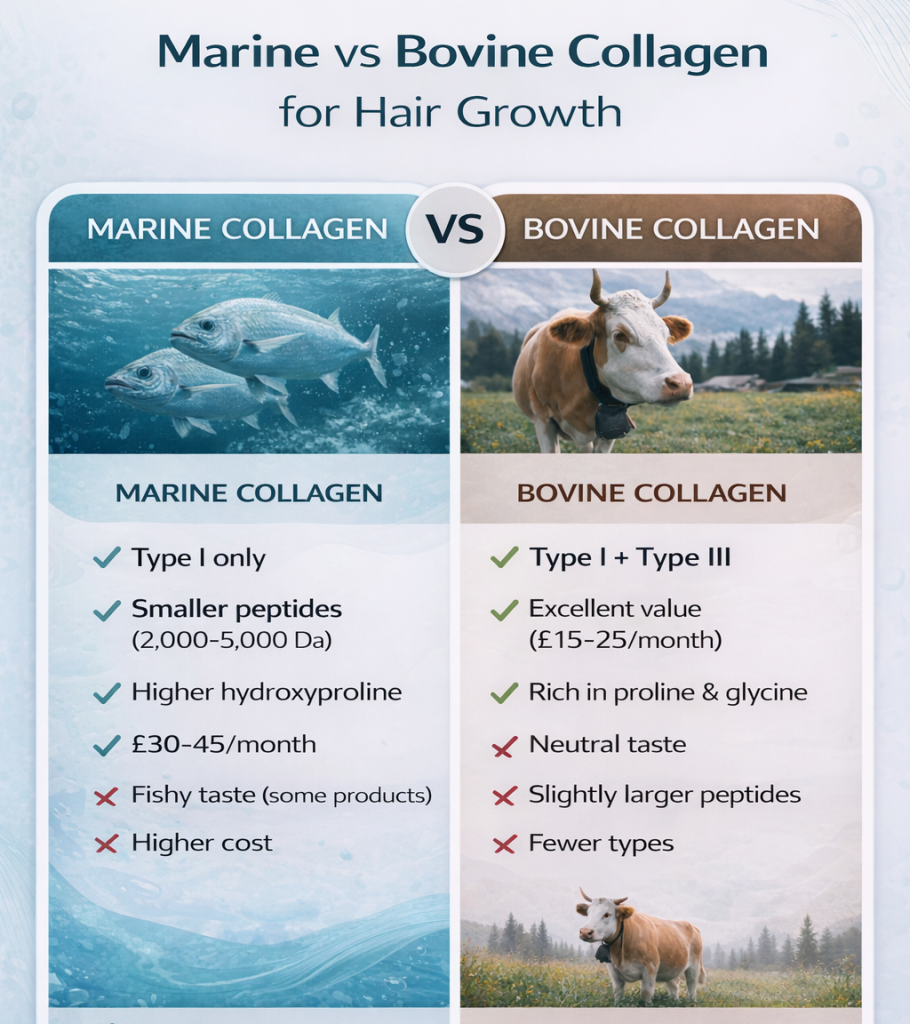
Marine collagen comes from fish skin and scales. It predominantly contains Type I collagen, which is the same type found in human skin, hair, and nails.
Advantages of Marine Collagen for Hair
Type I Collagen Focus: Hair is primarily associated with Type I collagen. Marine collagen’s exclusive Type I content means it directly provides the collagen type most relevant to hair structure.
Type I collagen comprises about 90% of your body’s total collagen and forms the main structural component of skin and hair.
Smaller Peptide Size: Marine collagen peptides tend to have lower molecular weight compared to bovine collagen. This means the molecules are smaller and may be absorbed more efficiently.
The typical molecular weight of marine collagen peptides ranges from 2,000 to 5,000 Daltons, whereas bovine collagen peptides are often slightly larger. This size difference could theoretically improve bioavailability, though the practical significance for hair growth remains debated.
Rich in Hydroxyproline: Marine collagen contains particularly high levels of hydroxyproline, an amino acid that plays a crucial role in collagen stability and structure. Some researchers suggest this might make marine collagen especially beneficial for tissues requiring Type I collagen, including hair.
Disadvantages of Marine Collagen for Hair
Higher Cost: Marine collagen supplements typically cost £30-45 per month in the UK, compared to £15-25 for bovine collagen. Over a year, this price difference adds up to £180-240 in additional expense.
For a three-month trial period (the minimum time needed to see hair results), you’re looking at £90-135 for marine collagen versus £45-75 for bovine.
Potential Taste Issues: Some users report a fishy taste or smell with marine collagen, particularly in unflavoured versions. While many manufacturers now produce virtually tasteless marine collagen, it remains a consideration.
Limited Type Variety: Marine collagen contains only Type I collagen. While this type is important for hair, Type III collagen (absent in marine sources) also plays a role in skin and scalp health.
Bovine Collagen for Hair Growth
Bovine collagen comes from cow hides or bones. It contains both Type I and Type III collagen, providing a broader range of collagen types compared to marine sources.
Advantages of Bovine Collagen for Hair
Contains Type I and Type III Collagen: Bovine collagen provides both Type I (important for hair structure) and Type III (important for skin elasticity and blood vessel health). This combination may support overall scalp health more comprehensively.
Type III collagen is particularly abundant in skin and may contribute to a healthier scalp environment for hair follicles.
Excellent Value: Bovine collagen costs significantly less than marine collagen while providing similar amino acid profiles. For someone on a budget who wants to try collagen for hair growth, bovine collagen offers a lower-risk entry point.
Many high-quality bovine collagen supplements cost £15-25 per month, making them accessible for long-term use.
Rich in Proline and Glycine: Bovine collagen provides abundant proline and glycine—two amino acids that are fundamental building blocks of keratin. While marine collagen also contains these amino acids, bovine collagen’s amino acid profile is very similar.
Neutral Taste: Bovine collagen is virtually tasteless and odourless, making it easy to mix into coffee, smoothies, or other beverages without affecting flavour.
Disadvantages of Bovine Collagen for Hair
Slightly Lower Absorption: Bovine collagen peptides may have slightly larger molecular weight compared to marine collagen, potentially leading to marginally lower absorption rates. However, high-quality hydrolysed bovine collagen still achieves excellent bioavailability.
The practical difference in absorption between well-processed marine and bovine collagen is likely minimal for most people.
Multiple Collagen Types: While containing Type III collagen can be an advantage, some argue that for hair-specific goals, the exclusive Type I content of marine collagen might be more targeted. However, there’s no strong evidence that Type III collagen interferes with hair benefits.
What Does the Research Say?
Unfortunately, there are limited studies directly comparing marine versus bovine collagen specifically for hair growth outcomes. Most collagen research for hair doesn’t distinguish between sources or uses only one type.
A systematic review published in 2023 examined oral collagen supplementation for hair and found positive results across various studies, but the trials used different collagen sources, making direct comparisons difficult.
What we can say based on available evidence:
Both Sources Work: Studies using marine collagen have shown positive results for hair, as have studies using bovine collagen. The amino acid profiles are similar enough that both should theoretically provide the building blocks needed for keratin synthesis.
Consistency Matters Most: The research consistently shows that benefits appear after 8-12 weeks of daily use, regardless of source. Missing doses or inconsistent intake appears more detrimental than choosing one source over another.
Individual Response Varies: Some people report better results with marine collagen, while others see equal benefits from bovine collagen. Genetic factors, diet, overall health, and the specific product formulation all influence outcomes.
Molecular Weight Affects Absorption: Smaller peptides (whether from marine or bovine sources) show better absorption in studies. The key is choosing a hydrolysed collagen product with peptides in the 2,000-5,000 Dalton range, regardless of the original source.
Which Should You Choose for Hair Growth?
The “best” choice depends on your individual priorities and circumstances.
Choose Marine Collagen If:
- You want the theoretically optimal choice: Marine collagen’s exclusive Type I content and smaller peptide size give it a slight theoretical edge for hair-specific goals.
- Budget isn’t a primary concern: You’re comfortable paying £30-45 monthly for a premium product.
- You’ve tried bovine without results: If you’ve given bovine collagen a fair trial (3+ months) without seeing benefits, marine collagen might be worth trying.
- You prefer fish-based supplements: Some people avoid bovine products for dietary, religious, or personal reasons.
Choose Bovine Collagen If:
- Value matters to you: You want effective results without paying a premium price.
- You’re new to collagen supplements: Starting with the more affordable option makes sense for your first 3-month trial.
- You want multiple collagen types: The Type I and Type III combination may provide broader benefits for overall scalp and skin health.
- You’re sensitive to fishy tastes: Even mild fishy notes in marine collagen can be off-putting for some people.
- You plan long-term use: For sustained supplementation over many months or years, the cost savings of bovine collagen add up significantly.
Consider Combining Both
Some people alternate between marine and bovine collagen or take smaller doses of both to get benefits from each source. While this increases complexity and cost, it ensures you’re getting diverse collagen types and amino acid profiles.
For example, you might take 5g of bovine collagen daily plus 2.5g of marine collagen for a combined approach.
Other Factors That Affect Hair Growth
Collagen supplementation works best as part of a comprehensive approach to hair health. Other important factors include:
Protein Intake: Hair is primarily protein. Ensure you’re eating adequate protein overall (0.8-1g per kg of body weight daily). Collagen supplements add to your protein intake but shouldn’t replace whole protein sources like meat, fish, eggs, or legumes.
Iron and Ferritin Levels: Iron deficiency is a common cause of hair loss, particularly in women. Ask your GP to check your ferritin levels if you’re experiencing hair thinning. Low ferritin (even with normal haemoglobin) can affect hair growth.
B Vitamins: Biotin (B7), B12, and folate all play roles in hair health. A balanced diet usually provides adequate amounts, but deficiencies can contribute to hair problems.
Stress Management: Chronic stress can push hair follicles into a resting phase (telogen effluvium), leading to increased shedding. Managing stress through exercise, sleep, and relaxation techniques supports overall hair health.
Scalp Health: Conditions like seborrheic dermatitis, scalp inflammation, or poor circulation can affect hair growth regardless of your collagen intake. Address underlying scalp issues alongside supplementation.
Hormonal Factors: Thyroid disorders, PCOS, menopause, and other hormonal changes significantly impact hair. If you’re experiencing notable hair loss, consult your GP to rule out hormonal causes.
How to Take Collagen for Hair Growth
Regardless of which source you choose, follow these guidelines for best results:
Dosage: Research suggests 2.5g to 15g daily, with most studies on hair using doses around 5-10g per day. Start with 5g daily and increase if needed.
Check your product’s recommended serving size, as collagen concentration varies between brands.
Timing: Take collagen at whatever time of day works best for your routine. Consistency matters more than timing. Many people mix it into morning coffee or smoothies for easy daily compliance.
Some prefer taking it on an empty stomach for potentially better absorption, though this hasn’t been definitively proven necessary.
Combine with Vitamin C: Vitamin C is essential for collagen synthesis in your body. Take your collagen supplement alongside vitamin C-rich foods or a vitamin C supplement to maximize effectiveness.
Many collagen supplements now include vitamin C in their formulation for this reason.
Be Patient: Hair growth is slow. The hair growth cycle takes time, and you won’t see results overnight. Most studies show benefits appearing after 8-12 weeks of consistent daily use.
Don’t expect dramatic changes in the first month. Track your progress with photos taken monthly in the same lighting to notice gradual improvements.
Stay Consistent: Taking collagen sporadically won’t deliver results. Set a daily reminder or incorporate it into an existing habit (like morning coffee) to ensure you don’t miss doses.
The Bottom Line: Marine or Bovine for Hair Growth?
Both marine and bovine collagen can support hair growth by providing the amino acids necessary for keratin synthesis and supporting scalp health.
Marine collagen has a theoretical advantage due to its exclusive Type I collagen content and potentially superior absorption from smaller peptides. However, it costs significantly more—typically 2-3 times the price of bovine collagen.
Bovine collagen offers excellent value, contains both Type I and Type III collagen for comprehensive benefits, and achieves similar results for most people at half the cost.
For most people, bovine collagen represents the more practical choice, especially when starting out. If you don’t see results after 3-4 months with a quality bovine collagen product, you could then consider switching to marine collagen to see if the different source makes a difference.
Ultimately, the most important factors for hair growth aren’t about marine versus bovine—they’re about choosing a high-quality hydrolysed collagen product, taking it consistently at adequate doses (5-10g daily), and maintaining overall nutritional health with sufficient protein, iron, and vitamins.
Whichever source you choose, give it at least 12 weeks of consistent daily use before evaluating results. Hair growth is gradual, and patience is essential for seeing the benefits collagen supplementation can provide.
Medical Disclaimer: This article is for informational purposes only and does not constitute medical advice. Consult your GP or a qualified healthcare professional before starting any new supplement, especially if you have underlying health conditions, take medications, or are pregnant or breastfeeding. Individual results may vary.
Affiliate Disclaimer: This article may contain affiliate links. If you purchase products through these links, we may earn a small commission at no additional cost to you. This helps support our website and allows us to continue providing helpful content.

I started this site after spending weeks trying to figure out which collagen actually works. Now I test products, read the studies, and share honest reviews so you can skip the research phase and get straight to results.