
The Quick Answer:
Neither bovine nor marine collagen is inherently “better.” The right choice depends on your specific health goals, dietary preferences, and budget.
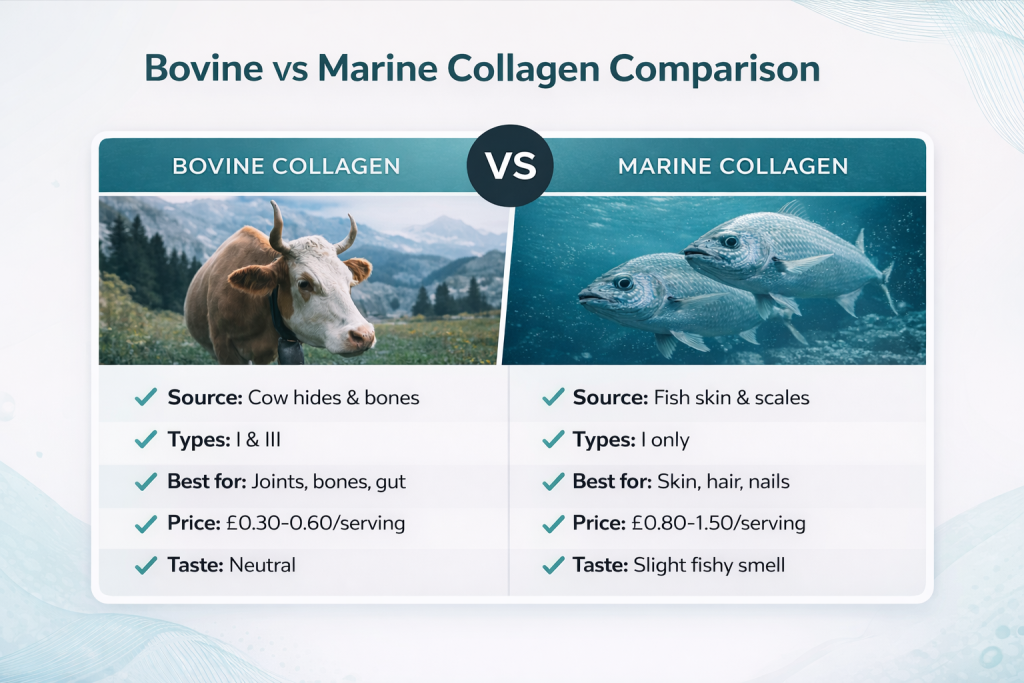
Bovine collagen contains Types I and III and is ideal for skin, bones, joints, and gut health. Marine collagen primarily contains Type I and may be slightly better absorbed for skin-focused benefits. Both are effective when taken consistently.
Introduction
If you’ve been researching collagen supplements, you’ve probably noticed the endless debate about bovine versus marine collagen. Marketing claims fly in all directions, with brands insisting their source is superior whilst competitors argue the opposite.
The truth is more nuanced. Both bovine and marine collagen can support your health, but they have distinct differences in composition, effectiveness for specific goals, sustainability, and cost.
This comprehensive guide cuts through the marketing noise to help you make an informed decision based on evidence, not hype.
We’ll compare everything from collagen types and bioavailability to price points and environmental impact, then help you determine which option best suits your needs.
What Is Bovine Collagen?
Bovine collagen is derived from cows, typically extracted from hides, bones, and connective tissues. In the UK, reputable manufacturers source bovine collagen from grass-fed cattle raised in Europe, where farming standards are generally higher and BSE (mad cow disease) risk is minimal.
When properly processed through hydrolysis, bovine collagen breaks down into smaller peptides that your body can absorb and utilise. It primarily contains Type I and Type III collagen, which together make up the majority of collagen in your own body.
Type I collagen is the most abundant protein in your body, found in skin, bones, tendons, and organs. Type III collagen works alongside Type I in your skin and is also present in blood vessels and internal organs.
What Is Marine Collagen?
Marine collagen comes from fish, extracted primarily from skin and scales. In the UK market, you’ll find marine collagen sourced from cod, haddock, pollock, and other fish commonly caught in sustainable fisheries.
Unlike bovine collagen, marine collagen predominantly contains only Type I collagen. It’s processed through hydrolysis just like bovine collagen, breaking it down into peptides your body can absorb.
Marine collagen has gained popularity partly due to effective marketing positioning it as a premium, more sustainable option compared to bovine sources.
Key Differences Between Bovine and Marine Collagen
1. Collagen Types
This is perhaps the most significant difference between the two sources.
Bovine collagen provides both Type I and Type III collagen. This combination makes it particularly well-suited for comprehensive support across multiple body systems. Your skin, bones, joints, and gut lining all contain both Type I and Type III collagen, so supplementing with both types may offer broader benefits.
Marine collagen contains almost exclusively Type I collagen. This makes it more targeted, focusing primarily on skin, hair, and nails where Type I collagen predominates. However, the absence of Type III collagen means it may offer less support for areas like blood vessels and internal organs.
2. Amino Acid Profile
Both bovine and marine collagen are rich in the amino acids glycine, proline, and hydroxyproline. These are the building blocks your body needs to produce its own collagen.
Marine collagen contains slightly higher levels of glycine and hydroxyproline compared to bovine collagen. Some research suggests this may contribute to better skin absorption, though the practical difference remains debatable.
Bovine collagen provides a broader amino acid profile overall, including slightly higher levels of proline, which supports cartilage formation and joint health.
3. Molecular Weight and Absorption
Marine collagen peptides tend to have a lower molecular weight than bovine collagen peptides. This means the molecules are smaller, which theoretically makes them easier for your body to absorb.
However, this difference matters less than you might think. High-quality hydrolysed bovine collagen also has a low molecular weight. When both are properly processed, the absorption difference becomes negligible.
Research comparing bioavailability between the two sources remains limited. Most studies show that both bovine and marine collagen are well absorbed when hydrolysed properly. The key factor is hydrolysis quality, not the original source.
4. Taste and Mixability
This is where personal preference comes into play.
Quality bovine collagen is virtually tasteless and odourless. It dissolves easily in both hot and cold liquids, making it simple to add to coffee, tea, smoothies, or even water without affecting flavour.
Marine collagen can sometimes have a slight fishy taste or smell, though reputable UK brands process it to minimise this. It generally mixes well in liquids but may be more noticeable in plain water compared to bovine collagen.
If you’re sensitive to tastes and smells, bovine collagen typically wins on this front.
5. Price Comparison
Marine collagen commands a premium price in the UK market. You can expect to pay anywhere from £0.80 to £1.50 per serving for quality marine collagen supplements.
Bovine collagen is more affordable, typically ranging from £0.30 to £0.60 per serving for comparable quality. This price difference adds up significantly over time.
For a three-month supply at recommended doses, marine collagen might cost £70 to £135, whilst bovine collagen costs £27 to £54. That’s potentially £100+ in savings per quarter with bovine collagen.
6. Sustainability Considerations
Both sources can be sustainable or unsustainable depending on sourcing practices.
Marine collagen from sustainable fisheries with proper certifications (like MSC) can be an environmentally responsible choice. However, overfishing remains a global concern, and not all marine collagen comes from well-managed sources.
Bovine collagen is often a byproduct of the meat industry. Since the hides and bones would otherwise go to waste, using them for collagen production is arguably a form of upcycling. Grass-fed, EU-sourced bovine collagen from cattle raised under high welfare standards can be a sustainable option.
Neither source is perfect from an environmental standpoint. Your best bet is choosing products with clear sourcing information and relevant certifications, regardless of whether it’s bovine or marine.
Which Is Better for Specific Health Goals?
1. For Skin Health
Both bovine and marine collagen support skin health, but through slightly different mechanisms.
Marine collagen’s Type I focus and smaller peptide size make it well-suited for skin benefits. Several studies have shown improvements in skin hydration and elasticity with marine collagen supplementation.
Bovine collagen provides both Type I and Type III, which work together in your skin’s dermal layer. The combination may offer more comprehensive support for overall skin structure and integrity.
Research on skin benefits shows positive results for both sources. A 2019 systematic review found that hydrolysed collagen (both bovine and marine) improved skin elasticity and hydration when taken consistently over 8 to 12 weeks.
Verdict: Marginally in favour of marine for pure skin focus, but bovine is nearly as effective and significantly cheaper.
2. For Joint Health
Bovine collagen edges ahead for joint support.
Your cartilage contains both Type I and Type III collagen, making bovine collagen’s dual-type composition more aligned with your joint structure. Several clinical trials have shown that bovine collagen supplementation may help reduce joint discomfort and improve mobility in people with osteoarthritis.
Marine collagen can still support joints through its Type I content, but it lacks the Type III collagen found in cartilage and connective tissues around joints.
Verdict: Bovine collagen is the better choice for joint health.
3. For Bone Health
Both Type I and Type III collagen are present in bone tissue, giving bovine collagen an advantage here as well.
Research suggests collagen supplementation may support bone mineral density, particularly in postmenopausal women. Studies showing these benefits have primarily used bovine sources.
Verdict: Bovine collagen is preferable for bone support.
4. For Hair and Nails
If you’re already a nutrition pro, you’ll know that hair and nails are primarily composed of keratin, not collagen. However, collagen provides the amino acids your body uses to build keratin.
Both bovine and marine collagen supply these amino acids. Marine collagen may have a slight edge due to its higher glycine content, but the difference is minimal in practice.
Verdict: Both work equally well for hair and nails.
5. For Gut Health
Your gut lining contains both Type I and Type III collagen, making bovine collagen more structurally similar to your intestinal tissue.
The amino acid glycine, abundant in both sources, supports gut lining integrity and may help with “leaky gut” symptoms. Proline, slightly higher in bovine collagen, also plays a role in gut health.
Verdict: Bovine collagen is the better choice for digestive support.
Can You Take Bovine and Marine Collagen Together?
Yes, you can absolutely combine bovine and marine collagen supplements. There’s no evidence of negative interactions between the two sources.
Taking both together gives you the benefits of Type I, II, and III collagen in one regimen. This comprehensive approach may offer more thorough support across all body systems.
However, combining both sources is more expensive and may not provide significantly better results than choosing one high-quality source and taking it consistently. For most people, sticking with one type at the proper dosage makes more practical and financial sense.
If you do choose to combine them, consider taking bovine collagen for overall support and adding a smaller dose of marine collagen if you’re particularly focused on skin benefits.
Which Should You Choose?
Choose Bovine Collagen If:
– You want comprehensive support for skin, bones, joints, and gut health,
– Budget is a consideration,
– You prefer better value for money,
– You’re focused on joint or bone health specifically,
– You want a tasteless, odourless supplement,
– You have no dietary restrictions on beef.
Choose Marine Collagen If:
– You’re primarily focused on skin, hair, and nail benefits,
– Budget isn’t a concern,
– You’re pescatarian (eat fish but not meat),
– You prefer marine-sourced supplements,
– You want to support sustainable fisheries,
– You have religious or dietary restrictions on beef consumption.
Either Works If:
– You’re looking for general anti-aging support
– You want to support your body’s overall collagen production
– You simply want to add collagen to your daily routine
How to Choose a Quality Product (Bovine or Marine)
Regardless of which source you choose, quality matters more than the origin.
Look for hydrolysed collagen or collagen peptides on the label. This confirms the product has been broken down for absorption.
Check the sourcing information. For bovine, look for grass-fed, EU-sourced cattle. For marine, look for wild-caught fish from sustainable fisheries with MSC or similar certification.
Verify third-party testing. Reputable brands test for heavy metals, contaminants, and purity. This information should be readily available.
Avoid products with unnecessary fillers, sweeteners, or additives. Pure collagen powder should contain just one ingredient: collagen peptides.
Consider the dose per serving. Effective doses in research typically range from 2.5g to 15g daily. Make sure your product provides at least 5g to 10g per serving for meaningful benefits.
The Bottom Line
Neither bovine nor marine collagen is universally superior. The “better” choice depends entirely on your individual goals, dietary preferences, and budget.
Bovine collagen offers excellent value, comprehensive support across multiple body systems thanks to its Type I and Type III content, and proven effectiveness for skin, joints, and bones. It’s the practical choice for most people.
Marine collagen provides targeted Type I collagen support, may offer slightly better absorption for skin benefits, and suits those with dietary restrictions on beef. It’s a solid choice if budget isn’t a concern and you’re primarily focused on skin health.
Both sources work when taken consistently at proper doses. The most important factors are choosing a high-quality product, taking it daily, and giving it time to work.
Rather than getting caught up in the bovine versus marine debate, focus on finding a product you’ll actually use consistently. That consistency matters far more than the collagen source.
Affiliate Disclosure: This article contains affiliate links. If you purchase through our links, we may earn a commission at no extra cost to you. This helps us continue providing comprehensive, unbiased health information for UK consumers. We only recommend products we genuinely believe offer value.
Medical Disclaimer: This content is for informational purposes only and should not replace advice from your GP or healthcare provider. Always consult your doctor before starting new supplements, especially if you have existing health conditions or take medications.

I started this site after spending weeks trying to figure out which collagen actually works. Now I test products, read the studies, and share honest reviews so you can skip the research phase and get straight to results.