
THE Quick Answer
Technically yes, bovine collagen breaks a fast because it contains calories and protein that trigger a metabolic response. A 10g serving contains approximately 35-40 calories and will stimulate some insulin release and activate digestion.
However, the practical answer depends on your fasting goals:
- Strict water fasting or autophagy maximization: Collagen breaks the fast. Avoid it during fasting windows.
- Fat loss / calorie restriction: 35-40 calories is negligible. Many people include collagen during fasts without impacting weight loss.
- Metabolic health / insulin sensitivity: Collagen causes minimal insulin response. Impact is small but technically breaks the fast.
- Muscle preservation during fasting: Collagen provides protein that may help preserve lean mass. This trade-off may be worthwhile.
Most intermittent fasting practitioners consider collagen a “dirty fast” food—not technically fasting, but close enough that benefits aren’t significantly compromised for most people.
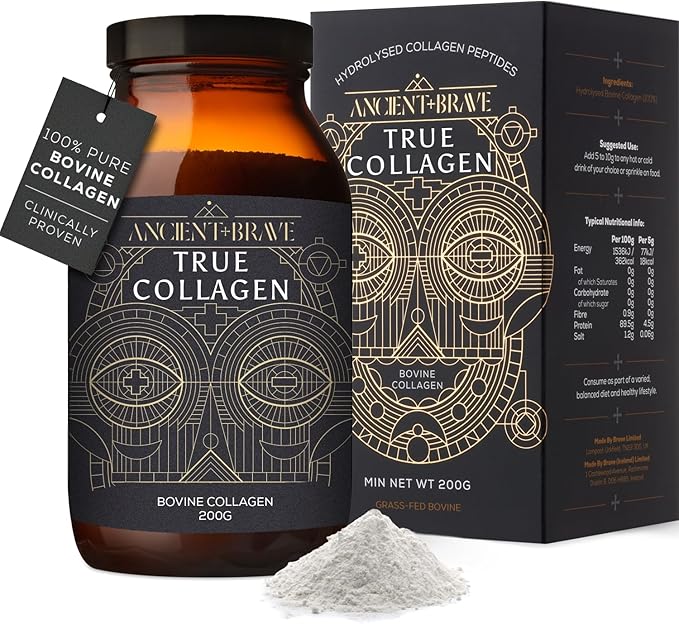
Ancient + Brave True Collagen
- Premium grass-fed collagen from European cattle
- 5g pure collagen peptides per serving
- Zero additives, flavours, or fillers
- Excellent mixability with no clumping
- Trusted by 50,000+ UK customers
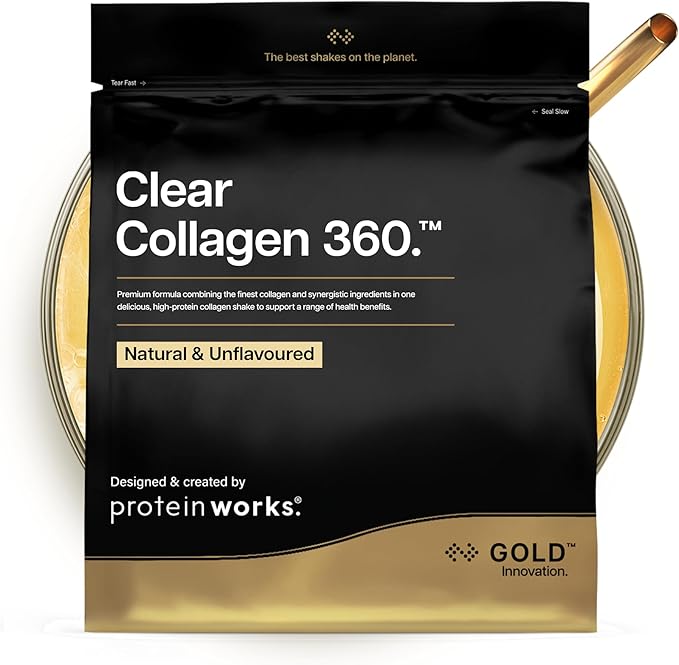
Protein Works Clear Collagen 360
- Premium hydrolysed bovine collagen peptides
- 480g pack size lasts a long time
- Enhanced with vitamin C and hyaluronic acid
- Natural & unflavoured for versatile mixing
- Award-winning Gold Innovation formula
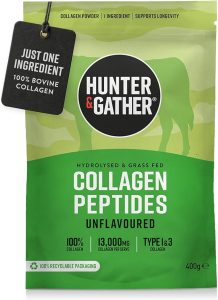
Hunter & Gather Collagen Peptides
- 100% grass-fed bovine collagen
- 13g collagen peptides per 400g pouch
- Type I & III collagen for skin and joints
- Unflavoured powder, mixes into any drink
- Sustainably sourced from European farms
Understanding What “Breaking a Fast” Means
The definition of “breaking a fast” depends on which fasting benefits you’re pursuing and how strict your interpretation is.
Strict Definition (Water Fasting)
A true fast involves consuming zero calories—only water, black coffee, or unsweetened tea. Anything containing calories, including collagen, technically breaks this fast.
From this perspective, yes, collagen absolutely breaks a fast.
Practical Definition (Intermittent Fasting)
Many intermittent fasting practitioners use a more flexible definition where minimal-calorie intake (typically under 50 calories) during the fasting window is acceptable if it doesn’t significantly spike insulin or halt fat burning.
From this perspective, collagen’s 35-40 calories per 10g serving falls in a grey area.
Goal-Oriented Definition
Whether collagen “breaks your fast” depends on your fasting goal:
Goal: Autophagy (cellular cleanup): Collagen may reduce autophagy because protein intake signals mTOR activation, which suppresses autophagic processes. If maximizing autophagy is your primary goal, avoid collagen during fasting.
Goal: Fat burning / ketosis: Collagen’s impact on fat burning is minimal. The small amount of protein won’t significantly impact ketone production or fat oxidation. Many people remain in ketosis while consuming collagen during fasts.
Goal: Insulin sensitivity / blood sugar control: Collagen causes a small insulin response, but it’s minimal compared to carbohydrates or large protein meals. According to research on protein and insulin response, collagen’s amino acid profile produces less insulin secretion than most complete proteins.
Goal: Caloric restriction / weight loss: 35-40 calories is negligible in the context of daily caloric intake. If your goal is simply to restrict calories, collagen’s small caloric load barely impacts your fast.
How Collagen Affects Your Fasted State
Caloric Content
Bovine collagen contains approximately 4 calories per gram of protein. A standard 10g serving provides:
- Calories: 35-40 (depending on purity)
- Protein: 9-10g
- Carbohydrates: 0g
- Fat: 0g
This caloric load is small but not zero. Your body must process these calories, which by definition ends the fasted state.
Insulin Response
All protein stimulates some insulin release, but collagen’s effect is relatively modest.
Collagen lacks tryptophan and is low in branched-chain amino acids (BCAAs)—the amino acids that trigger the strongest insulin responses. According to research in the journal Nutrients, collagen produces less insulin secretion per gram of protein than whey, casein, or soy protein.
However, “less insulin” doesn’t mean “no insulin.” Any insulin spike, however small, signals your body to shift from fat burning to nutrient processing.
mTOR Activation
Protein intake activates mTOR (mechanistic target of rapamycin), a cellular pathway that promotes growth and protein synthesis but inhibits autophagy.
If your primary fasting goal is autophagy—the cellular “cleanup” process that removes damaged proteins and organelles—then collagen intake during your fast will reduce this benefit.
Research suggests autophagy is most active during extended fasts (24+ hours) and in the complete absence of protein. If autophagy is your priority, save collagen for your eating window.
Digestive Activation
Consuming collagen activates your digestive system. Your body produces enzymes, stomach acid increases, and intestinal activity begins. This represents a shift from the fasted state where digestive processes are minimal.
For some people, one benefit of fasting is giving the digestive system a rest. Collagen prevents this “rest,” though the digestive load is lighter than from a full meal. Some users report digestive upset when first starting collagen supplements, but this is generally rare.
When Collagen During Fasting Makes Sense
Despite technically breaking a fast, there are scenarios where consuming collagen during fasting windows is beneficial:
1. Muscle Preservation During Extended Fasts
During fasts longer than 16-18 hours, your body may begin breaking down muscle tissue for amino acids (gluconeogenesis). A small serving of collagen provides protein that may help preserve lean mass without significantly impacting other fasting benefits.
This trade-off—slightly reduced autophagy in exchange for muscle preservation—may be worthwhile if you’re fasting for weight loss rather than maximum autophagy.
2. Morning Routine Consistency
Many people add collagen to morning coffee as part of their routine. If fasting until noon but consuming collagen coffee at 8am helps you stick to intermittent fasting consistently, the benefit of adherence may outweigh the technical “fast breaking.”
Perfect fasting that you can’t maintain is less effective than imperfect fasting you practice consistently.
3. Joint Health During Fasting
If you’re using intermittent fasting for health and take collagen for joint support, you may decide that consistent daily collagen intake (even during fasting windows) is more important than optimizing autophagy.
This is especially relevant if you train fasted—collagen may help protect joints during exercise without significantly impacting fat burning.
4. Blunting Extreme Hunger
Some people experience intense hunger during fasting windows. A small serving of collagen (35-40 calories) can blunt hunger enough to complete the fast successfully, which is better than breaking the fast entirely with a large meal.
If the choice is between consuming 40 calories of collagen or breaking your fast with a 400-calorie meal, the collagen is clearly the better option for maintaining metabolic benefits.
When to Avoid Collagen During Fasting
Skip collagen during your fasting window if:
- Maximizing autophagy is your primary goal: You’re fasting specifically to enhance cellular cleanup and repair.
- You’re doing a strict water fast: Any calories violate the protocol.
- You’re measuring ketones: Even small protein intake can temporarily reduce ketone production.
- You want to test “true” fasting: If you want to experience fasting in its purest form, eliminate all caloric intake including collagen.
- You have no difficulty fasting without it: If you fast easily without collagen, there’s no reason to add it during fasting windows.
Collagen vs Other “Fasting-Friendly” Foods
How does collagen compare to other supplements and foods people consume during fasts?
Collagen vs MCT Oil / Butter in Coffee
MCT oil or butter: Contains 100-150 calories from pure fat. Fat causes minimal insulin response but definitely breaks a fast calorically.
Collagen: Contains 35-40 calories from protein. Protein causes more insulin response than fat but fewer calories overall.
Verdict: Both technically break fasts. MCT oil may better support ketosis, while collagen provides protein for muscle preservation. Neither is appropriate for strict fasting.
Collagen vs BCAAs
BCAAs: Contain 20-40 calories per serving and trigger strong insulin responses due to their amino acid profile. BCAAs activate mTOR powerfully, significantly reducing autophagy.
Collagen: Contains similar calories but causes less insulin response and less mTOR activation than BCAAs.
Verdict: Collagen is “less breaking” of a fast than BCAAs, though both technically break fasts.
Collagen vs Bone Broth
Bone broth: Contains 30-50 calories per cup from protein, collagen, and minerals. Very similar metabolic effect to pure collagen.
Collagen: More concentrated protein per calorie, but similar overall impact.
Verdict: Essentially equivalent. Both provide collagen/protein with minimal calories. Either is acceptable in a “dirty fast” but neither works for strict fasting.
How to Use Collagen with Intermittent Fasting
If you decide to include collagen while practicing intermittent fasting, optimize the approach:
Strategy 1: Consume During Eating Window
The simplest approach: take your collagen during your eating window rather than fasting window. This eliminates any ambiguity—you get collagen’s benefits without compromising fasting. It also reduces any chance you’ll experience any digestive upset or other side effects of collagen supplementation.
Example: 16:8 fasting (eating window 12pm-8pm). Take collagen at 12pm with your first meal or at 7pm with dinner.
Strategy 2: Small Dose in Morning Coffee
Add 5-10g of collagen to morning coffee. Accept that this creates a “dirty fast” but enjoy the convenience and joint support.
Best for: People primarily fasting for weight loss or convenience rather than maximizing autophagy.
Strategy 3: Post-Workout (If Training Fasted)
If you exercise during your fasting window, consume collagen immediately post-workout. This provides protein for recovery while minimizing the duration of “breaking” your fast.
Example: Fast until 1pm. Train at 11am. Consume collagen at 11:30am post-workout, then break fast fully at 1pm.
Strategy 4: Alternate Day Use
Take collagen during eating windows most days, but on occasional extended fasts (24+ hours) for autophagy, skip collagen entirely.
Best for: People mixing different fasting protocols (daily 16:8 plus occasional longer fasts).
The Verdict: Does It Actually Matter?
For most people practicing intermittent fasting for weight loss and health, consuming 10g of collagen during fasting windows will not significantly impact results.
Research on intermittent fasting shows that the primary benefits—improved insulin sensitivity, fat loss, and metabolic health—come from the extended period without food, not from achieving zero-calorie perfection.
A 2019 study published in Cell Metabolism found that intermittent fasting benefits occurred even when participants consumed small amounts of calories during fasting windows.
If you enjoy collagen in your morning coffee and it helps you maintain your fasting protocol consistently, the practical benefits likely outweigh the theoretical drawbacks of technically “breaking” your fast with 35-40 calories.
However, if you’re fasting specifically to maximize autophagy or want to experience true fasting, skip the collagen and consume it during your eating window instead.
The Bottom Line on Collagen and Fasting
Bovine collagen technically breaks a fast because it contains calories and protein that trigger metabolic responses. However, the practical impact on fasting benefits is minimal for most people’s goals.
If your primary fasting goal is weight loss or metabolic health, collagen’s 35-40 calories won’t significantly compromise results. If you’re fasting for maximum autophagy or practicing strict water fasting, avoid collagen during fasting windows.
The best approach is understanding your fasting goals and making an informed decision about whether collagen during fasting windows serves or undermines those goals.
For most people, consistent collagen supplementation—whether during fasting or eating windows—delivers better results than perfect fasting without collagen that you can’t sustain.
For more information about collagen supplementation, see our guide to what bovine collagen is and how it works or learn about realistic timelines for seeing collagen results.
OUR CHOICE: Protein Works Clear Collagen 360
- Premium hydrolysed bovine collagen peptides
- 480g pack size lasts a long time
- Enhanced with vitamin C and hyaluronic acid
- Natural & unflavoured for versatile mixing
- Award-winning Gold Innovation formula
Ancient + Brave True Collagen
- Premium grass-fed collagen from European cattle
- 5g pure collagen peptides per serving
- Zero additives, flavours, or fillers
- Excellent mixability with no clumping
- Trusted by 50,000+ UK customers
Hunter & Gather Collagen Peptides
- 100% grass-fed bovine collagen
- 13g collagen peptides per 400g pouch
- Type I & III collagen for skin and joints
- Unflavoured powder, mixes into any drink
- Sustainably sourced from European farms
Medical Disclaimer: This article is for informational purposes only and does not constitute medical advice. Consult your GP or a qualified healthcare professional before starting any new supplement, especially if you have underlying health conditions, take medications, or are pregnant or breastfeeding. Individual results may vary.
Affiliate Disclaimer: This article may contain affiliate links. If you purchase products through these links, we may earn a small commission at no additional cost to you. This helps support our website and allows us to continue providing helpful content. Our reviews remain honest and unbiased regardless of affiliate relationships.

I started this site after spending weeks trying to figure out which collagen actually works. Now I test products, read the studies, and share honest reviews so you can skip the research phase and get straight to results.