
The Quick Answer
Bovine collagen reduces joint pain and supports cartilage health through multiple mechanisms. Clinical studies show that 10-15g of bovine collagen daily can significantly reduce activity-related joint pain after 8-12 weeks, with some people noticing improvements earlier.
Key benefits for joints:
- Reduces pain during physical activity by up to 40%
- Decreases morning stiffness and improves mobility
- Supports cartilage regeneration and slows osteoarthritis progression
- Enhances recovery from exercise and reduces joint soreness
- Provides building blocks for synovial fluid (joint lubrication)
Bovine collagen works best for mild to moderate joint issues, particularly activity-related pain. It is not a cure for severe arthritis but can provide meaningful pain reduction and improved function for most people.
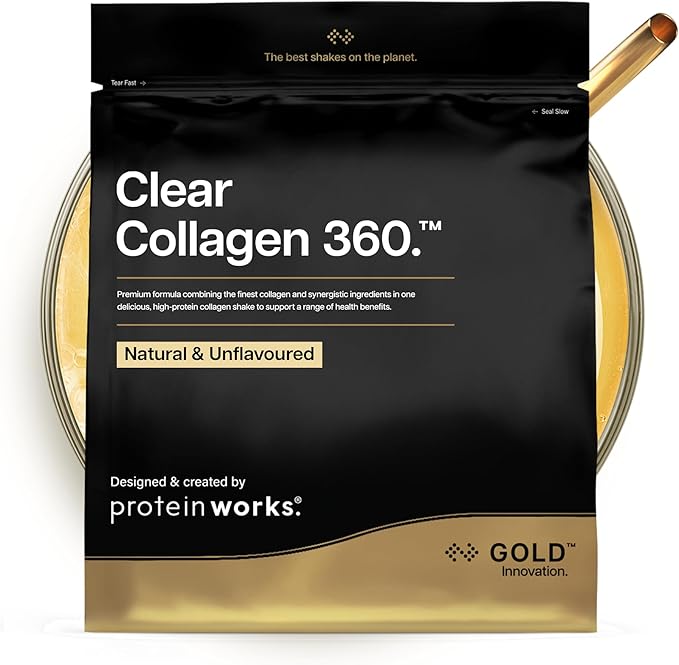
Protein Works Clear Collagen 360
- Premium hydrolysed bovine collagen peptides
- 480g pack size lasts a long time
- Enhanced with vitamin C and hyaluronic acid
- Natural & unflavoured for versatile mixing
- Award-winning Gold Innovation formula
Hunter & Gather Collagen Peptides
- 100% grass-fed bovine collagen
- 13g collagen peptides per 400g pouch
- Type I & III collagen for skin and joints
- Unflavoured powder, mixes into any drink
- Sustainably sourced from European farms
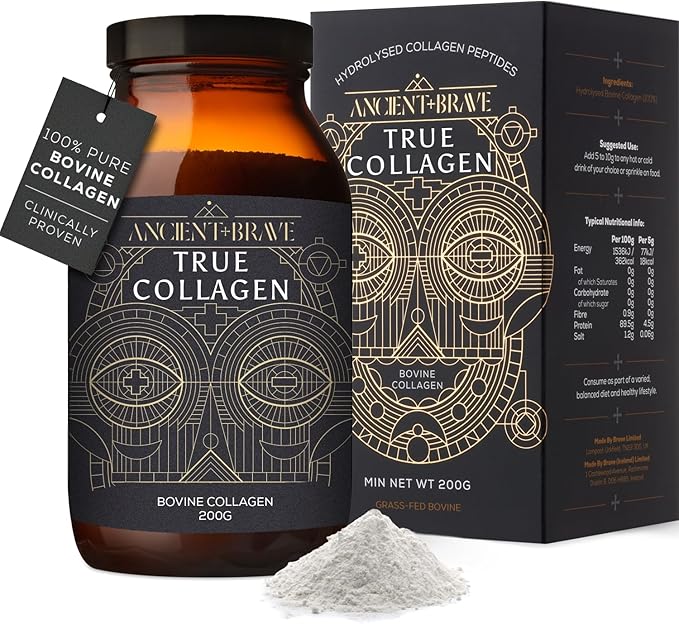
Ancient + Brave True Collagen
- Premium grass-fed collagen from European cattle
- 5g pure collagen peptides per serving
- Zero additives, flavours, or fillers
- Excellent mixability with no clumping
- Trusted by 50,000+ UK customers
Why Your Joints Need Collagen
Cartilage, the smooth tissue covering the ends of bones in your joints, consists primarily of collagen (approximately 60-70% of cartilage dry weight). This collagen provides cushioning and allows joints to move smoothly without bone-on-bone friction.
As you age or use your joints extensively, cartilage gradually breaks down. Natural collagen production declines by approximately 1% annually after age 25. By age 40, you’ve lost 20-30% of your collagen. This loss leads to thinner cartilage, more joint friction, and eventually pain and stiffness.
According to research published in the peer-reviewed journal ‘Nutrients’, supplementing with collagen provides peptides that accumulate in cartilage tissue and stimulate chondrocytes (cartilage cells) to produce more collagen and proteoglycans, the key components of healthy cartilage.
How Bovine Collagen Helps Joints
Mechanism 1: Provides Building Blocks for Cartilage
When you consume bovine collagen, it breaks down into collagen peptides during digestion. These peptides are absorbed into your bloodstream and distributed throughout your body.
Studies using radioactive tracers show that collagen peptides accumulate preferentially in cartilage tissue. Research in Nutrients journal confirms that these peptides reach cartilage within hours of consumption and remain present for extended periods.
Once in cartilage, the peptides serve as building blocks your chondrocytes, cells which make up healthy cartilage, use to synthesise new cartilage matrix. This supports cartilage maintenance and potentially stimulates repair of minor damage.
Mechanism 2: Stimulates Collagen Production
Beyond providing building blocks, collagen peptides act as signalling molecules. Specific peptide sequences trigger chondrocytes to increase their production of Type II collagen (the primary collagen in cartilage) and other cartilage components.
This cellular signalling effect means collagen supplementation doesn’t just provide raw materials but actively stimulates your body to produce more cartilage on its own. This two-pronged approach (building blocks plus stimulation) makes collagen particularly effective for joint health.
Mechanism 3: Reduces Inflammation
Some research suggests collagen peptides have anti-inflammatory properties that may reduce joint inflammation. While the mechanism isn’t fully understood, collagen appears to modulate inflammatory responses in joint tissue.
Reduced inflammation means less pain, swelling, and stiffness, making movement more comfortable.
Mechanism 4: Supports Synovial Fluid
Synovial fluid lubricates joints, reducing friction during movement. The synovial membrane that produces this fluid contains collagen.
Supporting synovial membrane health may improve joint lubrication, though more research is needed on this specific benefit.
Clinical Evidence: What the Research Shows
Activity-Related Joint Pain
A landmark study in Nutrients Journal examined athletes with functional knee problems. Participants taking 10g of collagen daily for 24 weeks experienced significant reductions in joint pain during activity compared to the placebo group.
The pain reduction was most pronounced during high-impact activities like running and jumping. Athletes reported that they could train more consistently with less joint discomfort.
Osteoarthritis Symptoms
Multiple studies demonstrate that collagen supplementation reduces osteoarthritis symptoms. A comprehensive review published in the International Journal of Medical Sciences analysed numerous trials and concluded that collagen peptides significantly improve pain, stiffness, and physical function in people with osteoarthritis.
The effect size is modest compared to prescription pain medications but comes without significant side effects. For mild to moderate osteoarthritis, collagen may provide sufficient pain relief to reduce or eliminate the need for regular pain medication.
Joint Mobility and Stiffness
Research shows that collagen supplementation improves overall joint mobility. Studies measuring range of motion find that participants taking collagen show improved flexibility and reduced stiffness compared to baseline measurements.
Morning stiffness, a common complaint among people with joint issues, appears particularly responsive to collagen supplementation. Many users report that joints feel less stiff upon waking after 8-12 weeks of consistent use.
Long-Term Joint Protection
While more long-term studies are needed, available evidence suggests that collagen supplementation may slow osteoarthritis progression. By supporting cartilage health, collagen may help preserve existing cartilage and reduce the rate of deterioration.
This protective effect is particularly valuable for people in the early stages of joint degeneration, where supporting cartilage health may delay the progression to more severe arthritis.
Best Results: Who Benefits Most?
Athletes and Active Individuals
People engaging in regular physical activity, particularly high-impact sports, experience substantial benefits from collagen supplementation.
Runners, weightlifters, tennis players, and others who stress their joints regularly often notice reduced joint discomfort and faster recovery.
The protective effect allows for more consistent training without joint pain limiting performance or forcing rest days.
People with Mild to Moderate Osteoarthritis
Those with early-stage osteoarthritis or general age-related joint degeneration see meaningful pain reduction and improved function.
While collagen cannot reverse severe cartilage loss, it can significantly improve comfort and mobility in mild to moderate cases.
Individuals Experiencing Morning Stiffness
Morning joint stiffness responds particularly well to collagen supplementation. If you wake up with stiff, achy joints that improve as you move throughout the day, collagen may substantially reduce this symptom.
People Over 40 with Joint Discomfort
Age-related cartilage loss begins accelerating in your 40s. People in this age group who experience occasional joint pain or stiffness often find that collagen supplementation prevents these symptoms from worsening and may even reverse mild discomfort.
Those Wanting to Prevent Joint Problems
Even if you don’t currently have joint pain, collagen supplementation may offer preventative benefits. Supporting cartilage health before problems develop could reduce your risk of future joint issues, though long-term preventative studies are still limited.
Ancient + Brave True Collagen
- Premium grass-fed collagen from European cattle
- 5g pure collagen peptides per serving
- Zero additives, flavours, or fillers
- Excellent mixability with no clumping
- Trusted by 50,000+ UK customers
Protein Works Clear Collagen 360
- Premium hydrolysed bovine collagen peptides
- 480g pack size lasts a long time
- Enhanced with vitamin C and hyaluronic acid
- Natural & unflavoured for versatile mixing
- Award-winning Gold Innovation formula
Hunter & Gather Collagen Peptides
- 100% grass-fed bovine collagen
- 13g collagen peptides per 400g pouch
- Type I & III collagen for skin and joints
- Unflavoured powder, mixes into any drink
- Sustainably sourced from European farms
Optimal Dosing for Joint Health
Standard Dose: 10g Daily
Most studies on joint health use 10g of collagen per day. This dose provides substantial benefits for most people and is well-tolerated.
Higher Dose for Severe Symptoms: 15g Daily
Some research suggests that people with more significant joint issues may benefit from 15g daily. While 10g works for most people, those with persistent joint pain might see additional improvement at the higher dose.
Split Dosing vs Single Dose
Evidence is mixed on whether splitting your dose (5g twice daily) offers advantages over a single 10g dose. For convenience, most people take their full dose once daily. If you experience any digestive discomfort, splitting the dose may help.
Consistency Is Crucial
Daily supplementation is essential. Taking collagen sporadically provides minimal benefits. Your body needs a consistent supply to maintain elevated collagen synthesis in cartilage tissue.
Timeline: When Will You Feel Relief?
Joint pain reduction typically takes longer than skin improvements from collagen. Here is a realistic timeline:
Weeks 1-4: No noticeable joint pain reduction yet. Collagen peptides are accumulating in cartilage, but tissue remodelling takes time.
Weeks 4-8: Some people begin noticing subtle improvements, particularly reduced morning stiffness or slightly less pain during activity. These early changes are often minor.
Weeks 8-12: More pronounced pain reduction becomes evident for most people. Activities that previously caused discomfort become more comfortable. Mobility improves.
Weeks 12-24: Continued improvement. Pain reduction reaches its maximum effect. Joint function stabilises at an improved level.
Beyond 24 weeks: Benefits plateau but remain stable with continued supplementation. Stopping collagen typically results in gradual return of symptoms over several weeks.
If you see no improvement after 12 weeks, consider increasing your dose to 15g daily or trying a different brand. Some people respond better to specific collagen products.
For more detailed timeline information, see our guide on how long bovine collagen takes to work.
Bovine Collagen vs Other Joint Supplements
Collagen vs Glucosamine/Chondroitin
Glucosamine and chondroitin have been the traditional go-to supplements for joint health. Research on their effectiveness is mixed, with some studies showing benefits and others showing minimal effects.
Collagen appears to have stronger and more consistent evidence for joint pain reduction, particularly in recent high-quality studies. Many people find collagen more effective than glucosamine, though individual responses vary.
You can safely combine collagen with glucosamine if desired, though collagen alone often provides sufficient benefits.
Collagen vs MSM
MSM (methylsulfonylmethane) is another popular joint supplement. It has anti-inflammatory properties and some evidence for pain reduction.
Collagen and MSM work through different mechanisms, making them complementary rather than competitive. Some people take both for enhanced joint support.
Collagen vs UC-II (Undenatured Type II Collagen)
UC-II is a specific form of undenatured Type II collagen that works through immune modulation rather than providing building blocks for cartilage repair.
UC-II is effective for joint pain but is taken in much smaller doses (40mg daily) compared to hydrolysed collagen (10g daily). UC-II specifically targets joint issues, while hydrolysed collagen provides broader benefits for skin, hair, and other tissues in addition to joints.
For joint-only support, UC-II may be preferable. For comprehensive benefits including skin and joints, hydrolysed bovine collagen is the better choice.
Enhancing Collagen’s Joint Benefits
Pair with Vitamin C
Vitamin C is essential for collagen synthesis. According to research from Oregon State University, vitamin C is required for the hydroxylation steps in collagen formation.
Take your collagen with vitamin C-rich foods (citrus, berries, peppers) or a vitamin C supplement (100-500mg) to optimise collagen production in your joints.
Maintain Healthy Weight
Excess body weight increases stress on weight-bearing joints (knees, hips, ankles). While collagen supports cartilage health, reducing joint stress through weight management enhances its effectiveness.
Stay Active with Low-Impact Exercise
Movement stimulates cartilage health by promoting nutrient flow. Low-impact activities like swimming, cycling, or walking support joint health without excessive stress. Combine these activities with collagen supplementation for optimal results.
Avoid Inflammatory Foods
Excessive sugar, processed foods, and trans fats promote inflammation that can worsen joint pain. An anti-inflammatory diet enhances collagen’s benefits.
Consider Anti-Inflammatory Supplements
Omega-3 fatty acids, curcumin, and ginger have anti-inflammatory properties that complement collagen’s cartilage-supporting effects. While not necessary, these may enhance overall joint comfort.
What Collagen Cannot Do
It is important to have realistic expectations about collagen’s limitations:
Cannot reverse severe cartilage loss: If you have advanced osteoarthritis with significant cartilage destruction, collagen cannot regenerate lost tissue. It may provide some pain relief but will not restore severely damaged joints.
Cannot replace medical treatment: Collagen is a supplement, not a medication. For serious joint conditions, follow your doctor’s treatment recommendations. Collagen can complement medical treatment but should not replace it.
Cannot work instantly: Unlike pain medications that provide rapid relief, collagen requires 8-12 weeks to show meaningful effects. This gradual timeline reflects the time needed for tissue remodelling.
Cannot help inflammatory arthritis: Collagen works best for osteoarthritis (mechanical wear and tear). For inflammatory conditions like rheumatoid arthritis, collagen may provide minimal benefit. These conditions require different treatment approaches.
Choosing Quality Collagen for Joint Health
Not all collagen supplements are equal. For joint benefits, look for:
Hydrolysed collagen peptides: Ensure the product contains hydrolysed collagen (collagen peptides), not gelatin or native collagen. Hydrolysis is essential for absorption. See our guide on hydrolysed vs native collagen for details.
Grass-fed source: Higher quality collagen comes from grass-fed cattle. This indicates better sourcing and manufacturing standards.
Third-party testing: Reputable manufacturers test for purity, heavy metals, and contamination. Look for products with certificates of analysis available on request.
Appropriate serving size: Products should provide 10g of collagen per serving. Avoid products with tiny serving sizes that would require multiple scoops to reach effective doses.
Minimal additives: Pure collagen contains only hydrolysed collagen peptides. Avoid products with excessive fillers, sweeteners, or unnecessary ingredients.
See our comprehensive guide to the best bovine collagen supplements in the UK for specific product recommendations suitable for joint health.
Safety Considerations
Bovine collagen is generally safe for joint health, but be aware of a few considerations:
Blood-thinning medications: Collagen may affect blood clotting. If you take warfarin, aspirin, or other blood thinners, consult your doctor before supplementing.
Surgery: Stop collagen supplementation 1-2 weeks before scheduled surgery due to potential effects on blood clotting.
Beef allergy: Avoid bovine collagen if you have a confirmed beef allergy. Consider marine collagen as an alternative.
Calcium intake: Collagen contains small amounts of calcium. If you take calcium supplements or have hypercalcemia, discuss collagen supplementation with your doctor.
For comprehensive safety information, see our detailed guide on bovine collagen safety.
The Bottom Line on Collagen for Joints
Bovine collagen provides research-backed benefits for joint health, reducing pain and supporting cartilage integrity. Most people experience noticeable improvements after 8-12 weeks of consistent daily supplementation with 10-15g.
While not a cure for severe arthritis, collagen offers meaningful pain reduction and improved function for mild to moderate joint issues. The combination of pain relief, improved mobility, and potential protective effects makes it a valuable supplement for anyone concerned about joint health.
For best results, choose high-quality hydrolysed collagen, take it consistently every day, pair it with vitamin C, and maintain an active lifestyle. Combined with appropriate medical care when needed, collagen supplementation can significantly improve your joint comfort and function.
For more information about starting collagen supplementation, see our guides on comprehensive collagen benefits or what bovine collagen is and how it works.
Hunter & Gather Collagen Peptides
- 100% grass-fed bovine collagen
- 13g collagen peptides per 400g pouch
- Type I & III collagen for skin and joints
- Unflavoured powder, mixes into any drink
- Sustainably sourced from European farms
Ancient + Brave True Collagen
- Premium grass-fed collagen from European cattle
- 5g pure collagen peptides per serving
- Zero additives, flavours, or fillers
- Excellent mixability with no clumping
- Trusted by 50,000+ UK customers
Protein Works Clear Collagen 360
- Premium hydrolysed bovine collagen peptides
- 480g pack size lasts a long time
- Enhanced with vitamin C and hyaluronic acid
- Natural & unflavoured for versatile mixing
- Award-winning Gold Innovation formula
Medical Disclaimer: This article is for informational purposes only and does not constitute medical advice. Consult your GP or a qualified healthcare professional before starting any new supplement, especially if you have underlying health conditions, take medications, or are pregnant or breastfeeding. Individual results may vary.
Affiliate Disclaimer: This article may contain affiliate links. If you purchase products through these links, we may earn a small commission at no additional cost to you. This helps support our website and allows us to continue providing helpful content. Our reviews remain honest and unbiased regardless of affiliate relationships.

I started this site after spending weeks trying to figure out which collagen actually works. Now I test products, read the studies, and share honest reviews so you can skip the research phase and get straight to results.