
Red Light Therapy for Collagen: Does It Actually Work? UK Guide 2026
Red light therapy has moved from niche biohacking circles into mainstream skincare. Celebrities swear by it, dermatologists recommend it, and LED masks are now sold in Boots alongside moisturisers. The big promise? Stimulating your skin to produce more collagen naturally.
But does red light therapy actually boost collagen, or is this another wellness trend with more marketing than science? We have dug into the research to find out what is real and what is hype.
The short answer: yes, red light therapy does stimulate collagen production, and the evidence is surprisingly solid. But there are important details about wavelength, dosage, and device quality that determine whether you will see results.
In This Guide
- Does Red Light Therapy Boost Collagen?
- How Does Red Light Stimulate Collagen?
- What Wavelength Is Best for Collagen?
- Red Light Therapy Devices for Home Use
- How to Use Red Light Therapy for Best Results
- Combining RLT with Collagen Supplements
- What to Expect: Results Timeline
- Side Effects and Safety
- RLT vs Collagen Supplements: Which Is Better?
- FAQs
Does Red Light Therapy Boost Collagen?
Let us start with the science. Does red light actually stimulate collagen, or are we all just shining expensive torches at our faces?
The research says yes. A 2014 study published in Photomedicine and Laser Surgery found that participants treated with red light therapy showed significantly increased collagen density compared to controls. Subjects received treatment twice weekly for 30 sessions, and improvements were measured objectively using ultrasound.
Another controlled trial from 2013 found that light therapy increased collagen production by stimulating fibroblasts, the cells responsible for making collagen in your skin. Participants showed measurable improvements in skin texture, fine lines, and overall complexion.
More recently, a 2025 study published in the journal Photochemical and Photobiological Sciences concluded that red light therapy shows strong evidence for improving skin complexion and collagen density with minimal side effects.
And in March 2026, Nature published a major feature examining the broader science behind red light therapy. The article confirmed that the biological mechanisms are well supported by research, with many researchers pointing to a biological “sweet spot” between too little and too much light. The wavelengths used in quality devices (630-850nm) interact with cellular processes in ways that are now increasingly well understood.
So does red light therapy increase collagen? The evidence suggests it does. But understanding how it works helps explain why device quality and usage matter so much.
How Does Red Light Stimulate Collagen?
Red light therapy works through a process called photobiomodulation. Here is what happens at the cellular level.
When red light (typically 630-660nm wavelength) or near-infrared light (810-850nm) penetrates your skin, it is absorbed by mitochondria, the energy-producing structures inside your cells. This absorption triggers several beneficial effects.
First, it increases ATP production. ATP is cellular energy, and more of it means your cells can work more efficiently. For fibroblasts (collagen-producing cells), this means ramping up collagen synthesis.
Second, red light reduces oxidative stress and inflammation. Chronic inflammation damages existing collagen and impairs new production. By calming this inflammation, red light creates conditions where collagen can thrive.
Third, it improves blood circulation to treated areas. Better blood flow means more nutrients and oxygen reaching skin cells, supporting the collagen production process.
The result? Over time, consistent red light exposure encourages your skin to produce more Type I and Type III collagen naturally. This is the same collagen you would get from bovine collagen supplements, but produced by your own body.
What Wavelength Is Best for Collagen Production?
Not all red light is created equal. The wavelength matters enormously.
For collagen stimulation specifically, 630-660nm (red light) penetrates the upper layers of skin (epidermis and dermis). This is the range most relevant for surface-level collagen production, fine lines, and skin texture. The 2026 Nature feature confirmed that these wavelengths interact with cellular mechanisms in ways that are now well supported by research.
810-850nm (near-infrared) penetrates deeper into tissue. Better for inflammation, healing, and reaching deeper skin structures where collagen and elastin production occurs. Near-infrared is invisible to the eye but measurably effective in clinical studies.
Many quality devices offer both wavelengths, which is ideal. If you are primarily focused on collagen and anti-ageing, prioritise the 630-660nm range. If you want broader benefits including muscle recovery and joint support, look for combination devices.
Some advanced panels, like the BlockBlueLight PowerPanel range, add additional wavelengths including 590nm amber and 1060nm deep near-infrared for an even broader spectrum. There is emerging research supporting these wavelengths, but 660nm and 850nm remain the gold standard.
If a device does not specify its exact wavelengths, or just says “red light” without giving nanometre figures, walk away.
Red Light Therapy Devices for Home Use
Professional red light therapy sessions typically cost £50 to £150 per treatment, with courses of 10+ sessions recommended. That adds up quickly. The good news is that home devices have become increasingly effective and affordable.
LED Face Masks
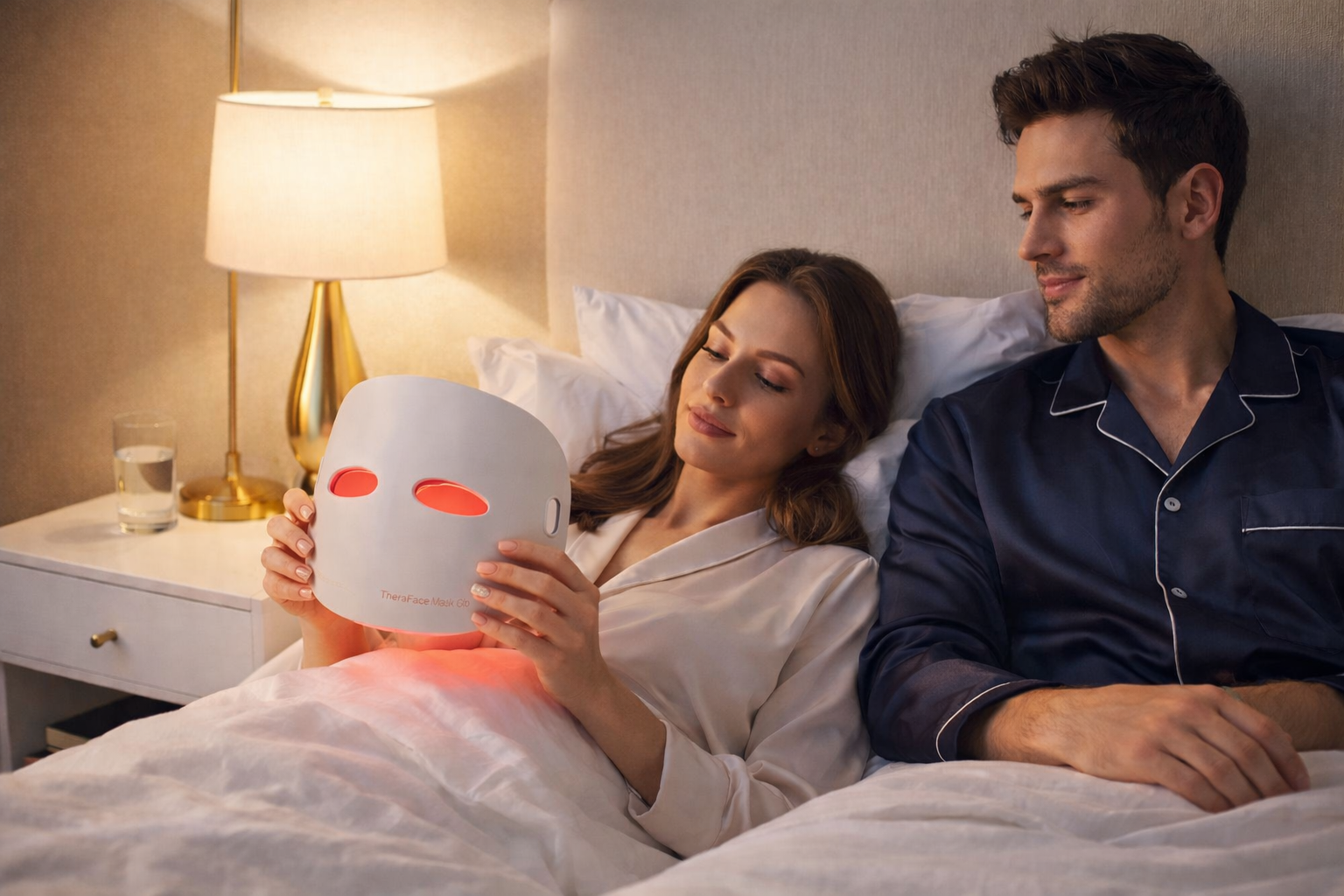
LED face masks have become hugely popular, particularly after celebrity endorsements. They are designed specifically for facial skin and are hands-free, making them convenient to use while relaxing. They are currently the most popular way to get red light therapy at home.
The best options for UK buyers include the Shark CryoGlow (480 LEDs with under-eye cooling, around £280), the CurrentBody Series 2 (three wavelengths including 1072nm deep NIR, £399), and the Silk’n LED Face Mask (four light colours, just £99). For a full comparison, see our guide to the best LED face masks UK.
Masks are best for people focused specifically on facial skin, fine lines, and anti-ageing. The downside is that they only treat your face, not your neck, chest, hands, or the rest of your body.
Red Light Therapy Panels
Panels are flat devices mounted on stands, doors, or walls that emit red light over a larger area. They range from small tabletop units to full-body panels and offer significantly more versatility than masks.
Our top pick for panels is the BlockBlueLight PowerPanel PRO (five wavelengths, 160mW/cm², five-year warranty, £699.95). For budget options, the ThermoLab Aura Pro (£159.85) and Nebula 300W (£149.99) both deliver clinically proven wavelengths at accessible price points. See our full guide to the best red light therapy panels UK for all seven of our recommendations.
Panels are best for people who want to treat multiple areas (face, neck, chest, body), those interested in full-body benefits, and serious users willing to invest in versatility.
Red Light Therapy Lamps and Torches
Smaller, often handheld devices that you can target at specific areas. More affordable entry point but limited in coverage. The BlockBlueLight Target Torch (£154.95) is a good example: three wavelengths in a pocketable rechargeable device, useful for spot treatment of a sore knee, jaw, or specific facial area.
Best for beginners, those on a budget, or targeting specific spots rather than the whole face.
How to Use Red Light Therapy for Best Collagen Results
Having the right device is only half the equation. Using it correctly matters just as much.
Frequency and Duration
Most research showing collagen benefits used treatment protocols of 3 to 5 sessions per week, 10 to 20 minutes per session, consistently for 8 to 12 weeks minimum. Do not expect overnight results. Collagen production is a gradual process. Most users report noticeable improvements after 4 to 8 weeks of consistent use, with continued improvement over several months.
The Nature feature highlighted that many researchers point to a biological “sweet spot” between too little and too much light. More is not always better. Follow your device manufacturer’s guidelines for session length and frequency.
Distance from Device
Masks sit directly against the skin. Panels should be positioned 6 to 18 inches from your skin depending on power output. Lamps work at 2 to 6 inches from the target area. Closer is not always better because the light needs space to spread evenly across the treatment area.
Clean, Bare Skin
Remove makeup and skincare products before treatment. Some ingredients can interact with light therapy or block penetration. Treat on clean skin, then apply your regular skincare afterwards. One exception: some practitioners recommend applying collagen-boosting serums containing vitamin C after red light treatment, as the increased cellular activity may enhance absorption.
Combining Red Light Therapy with Collagen Supplements
Here is where things get interesting for our readers. Can you combine red light therapy with oral collagen supplements for enhanced results?
The logic makes sense: red light stimulates your fibroblasts to produce more collagen, while oral collagen supplements provide the amino acid building blocks (glycine, proline, hydroxyproline) needed for that production.
While there is no direct research on this specific combination, the mechanisms are genuinely complementary. Red light therapy tells your cells to make more collagen. Collagen supplements provide the raw materials for collagen production. Think of it like pressing the accelerator while filling the tank with fuel. Both contribute to the end goal.
Many people in the biohacking and skincare communities combine both approaches and anecdotally report better results than either method alone. If you are serious about collagen production, using both strategies makes theoretical sense.
For collagen supplement recommendations, see our guides to the best bovine collagen supplements UK and best collagen for sagging skin.
Red Light Therapy Collagen Benefits: What to Expect
Based on research and user reports, here is what red light collagen therapy can realistically deliver.
Weeks 1 to 4: Skin may feel softer and more hydrated. Some users notice a “glow” after sessions. No major visible changes yet.
Weeks 4 to 8: Fine lines may start to soften. Skin texture improvements become noticeable. Overall complexion often improves.
Weeks 8 to 12: More significant improvements in skin firmness. Deeper lines may show reduction. Collagen density measurably increased in studies.
Months 3 to 6: Continued improvement with consistent use. Results plateau eventually, but maintenance treatments preserve benefits.
Red light therapy is not a facelift. It will not eliminate deep wrinkles or dramatically tighten severely sagging skin. But for prevention, early intervention, and general skin quality improvement, the evidence supports its effectiveness.
Collagen Red Light Therapy Side Effects
One of the appeals of red light therapy is its excellent safety profile. Unlike UV light (which damages skin), red and near-infrared wavelengths are not known to cause DNA damage or increase skin cancer risk. That said, red light therapy devices, and especially masks, are fairly new products. There is no guarantee they are entirely risk free despite long-standing studies into red-light effects.
Reported side effects are minimal. Temporary redness can occur, similar to a light flush, which typically fades within an hour. Eye strain is possible if you look directly at bright LEDs, so most devices include eye protection. Headaches are rarely reported, usually from individuals sensitive to light. Some photosensitising medications may interact, so always check with your doctor if you take tetracyclines, certain acne medications, or other photosensitive drugs.
Contraindications to be aware of include active skin cancer or suspicious lesions (consult your dermatologist first), pregnancy (limited safety data), epilepsy or seizure disorders (some devices have flickering that may trigger), and photosensitising medications.
For most healthy adults, red light therapy is very safe when used as directed. Always follow manufacturer guidelines and start with shorter sessions to assess your tolerance. We always recommend you check with your healthcare provider before beginning any type of treatment or supplement.
Red Light Therapy vs Collagen Supplements: Which Is Better?
This is not really an either/or question. They work through different mechanisms and can complement each other.
| Factor | Red Light Therapy | Collagen Supplements |
|---|---|---|
| How it works | Stimulates your cells to produce collagen | Provides amino acids for collagen production |
| Evidence base | Good clinical evidence | Good clinical evidence |
| Time to results | 4-12 weeks | 4-12 weeks |
| Upfront cost | £99-£700 (device) | £15-40 per month |
| Ongoing cost | Electricity only | Monthly supplement cost |
| Convenience | 10-20 min sessions | Add to daily drink |
| Best for | Targeted facial/body areas | Whole-body collagen support |
If budget is limited, collagen supplements offer the lower barrier to entry and whole-body benefits. If you are specifically focused on facial skin and willing to invest upfront, red light therapy appears to be highly effective. For optimal results, many people use both.
The Bottom Line
Red light therapy for collagen production is backed by legitimate science, not just wellness marketing. The clinical evidence, now further validated by a 2026 Nature feature, shows it genuinely stimulates fibroblasts to produce more collagen, with visible improvements in skin texture, fine lines, and firmness over 8 to 12 weeks of consistent use.
For UK buyers interested in trying red light collagen therapy at home, the market now offers strong options at various price points. LED masks are convenient for facial treatment, panels offer better versatility and value for larger areas, and budget lamps provide an entry point for the curious.
The key factors for success are: choosing a device with proper wavelengths (630-660nm for red, 810-850nm for near-infrared), using it consistently for at least 8 weeks, and having realistic expectations. This is not instant transformation, but gradual, measurable improvement.
For those serious about collagen, combining red light therapy with oral collagen supplements covers both the cellular stimulation and the raw material supply. It is the belt-and-braces approach that many skincare enthusiasts swear by.
Our Recommended Devices for Collagen
BlockBlueLight PowerPanel PRO
£699.95- Five wavelengths (630/660/810/830/850nm) covering skin and deeper tissue
- Over 160mW/cm² irradiance; five-year warranty
- Treats face, neck, chest, hands, and body
Shark CryoGlow LED Face Mask
£279.99- 480 LEDs with red (630nm), blue (415nm), and infrared (830nm)
- Under-eye cooling technology; 4-8 minute sessions
- 4.5 stars from 500+ reviews on Boots
Frequently Asked Questions
Related Reading
Medical Disclaimer: This article is for informational purposes only and does not constitute medical advice. Consult your GP or a qualified healthcare professional before starting any new treatment or supplement, especially if you have underlying health conditions, take medications, or are pregnant or breastfeeding. Individual results may vary.
Affiliate Disclaimer: This article may contain affiliate links. If you purchase products through these links, we may earn a small commission at no additional cost to you. This helps support our website and allows us to continue providing helpful content. Our reviews remain honest and unbiased regardless of affiliate relationships.

I started this site after spending weeks trying to figure out which collagen actually works. Now I test products, read the studies, and share honest reviews so you can skip the research phase and get straight to results.